
MUSC Health has become one of a handful of places on the East Coast where people with the most common cause of vertigo have a specially designed device, the TRV Chair, as a diagnosis and treatment option. It’s made by Interacoustics.
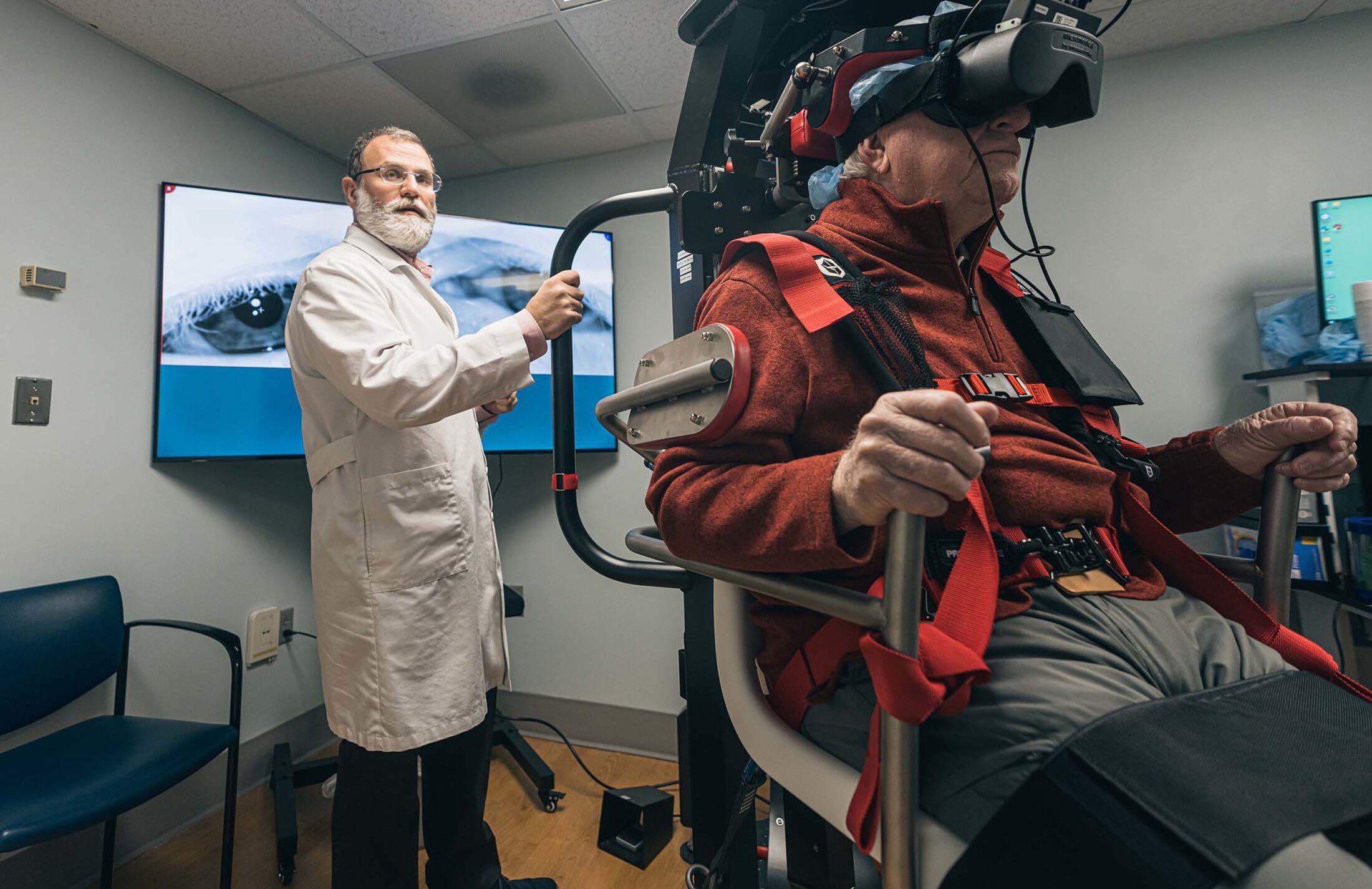
Habib Rizk, M.D., is a neurologist and specializes in ear problems, including vertigo. He said the new chair lets his team take care of patients with a type called benign paroxysmal positional vertigo, or BPPV, who can’t lie flat. “It rotates around its axis, and we can flip the patients upside down like a roller coaster. They’re strapped in kind of like a Formula One driver.”
What is BPPV?
Before we get to more details on that chair, here’s a look at the condition it’s designed to diagnose and treat: benign paroxysmal positional vertigo.
Benign = not life-threatening.
Positional = occurring in a certain position.
Paroxysmal = sudden attack.
Vertigo = condition that causes dizziness.
People get BPPV when little crystals in the inner ear that help with balance come loose and end up in other places in the ear where they don’t belong.
“The crystals are calcium carbonate crystals. We're born with them. There are about a trillion of them,” Rizk said.
“They are in certain areas of the inner ear, and they act like motion sensors. When you move and accelerate and decelerate, they're embedded in a gelatin matrix that shares a sensor. Like when you have a centrifugal effect, it kind of presses on or off on a switch and gives you a sense of information about movement in some cases.”
Rizk said BPPV is more frequent in older people, including women after menopause. “It can also happen after a head trauma. Those crystals get dislodged and fall into a different compartment. They start giving fake information of movement. So patients move their head up, and they suddenly feel like they're moving upside down. They get a vertigo sensation.”
Diagnosing BPPV
That sudden, disorienting sensation can lead people to get help at vestibular and balance disorders (vertigo) programs, such as the one at MUSC Health.
That’s where Rizk and his team diagnose the causes of the dizziness. To do that, Rizk said they use a series of carefully guided head and neck movements to observe how the inner ear responds. “You need them to lie flat and hyperextend their neck. Moving the head makes the crystals move into different locations in the ear, which makes the eyes move in specific ways. That lets us figure out which ear and canal are causing the problem.”
But some people can’t lie flat. “In people who have spine difficulties, mobility issues, we can’t treat them the traditional way.”
That’s where the TRV Chair comes in.
TRV Chair
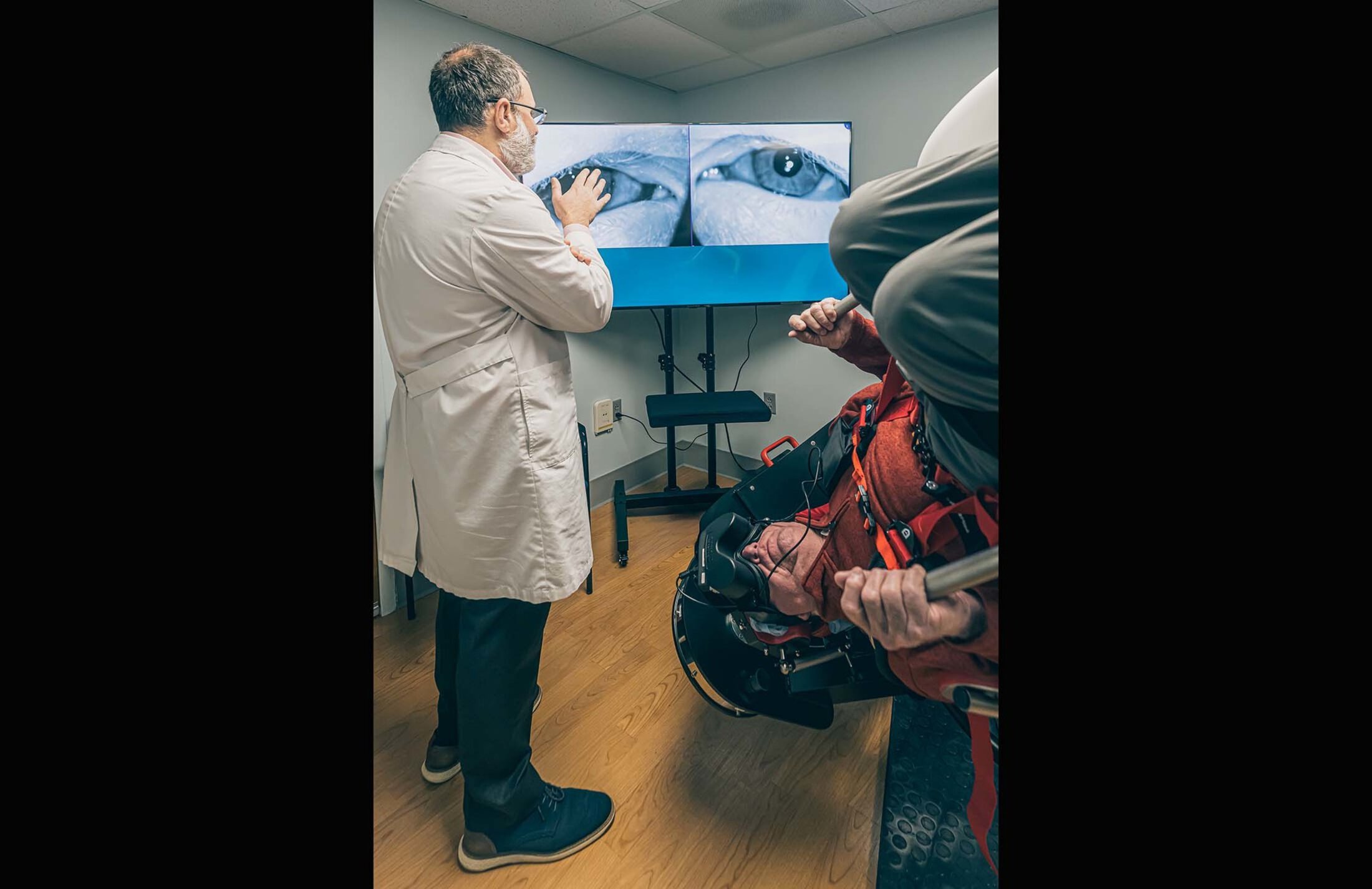
The chair, named after inventor Thomas Richard-Vitton, secures patients with a four-point harness, a leg strap, shoulder pads and a head mount. A camera shows their eye movements to the doctor as the chair moves.
The device can then help treat BPPV after the doctor determines which ear canal is affected. The company that makes the TRV Chair says the energy it generates through movement is an important factor in its effectiveness.
Rizk gave an example of that movement. “There's a maneuver called the BBQ roll. Because they're strapped in, the chair can flip 180 degrees. So they don't need to extend their neck.”
That lets the doctor do the treatment without causing other existing problems, such as spine issues, to get worse.
But most people with BPPV don’t need the TRV Chair for treatment. Some recover on their own. Others work with physical therapists such as the one who’s part of Rizk’s team, using movements that can ease the crystals into spots where they won’t cause dizziness anymore.
People who do need the chairs, however, can see big benefits, Rizk said. There are about 150 TRV Chairs in use around the world, including the one at MUSC Health.
That one was a gift to the Medical University of South Carolina’s Department of Otolaryngology – Head and Neck Surgery to support the multidisciplinary clinic led by Rizk. Rizk said he's grateful for the donation, which means he can now help even the most challenging and fragile patients suffering from BPPV.
“This allowed us to open up an additional arm to people who, in the past, were harder to diagnose and treat properly because of mobility issues and structural problems and their spines. So that's the win here.”
Helen Adams
Recent Ear, Nose, & Throat Care stories